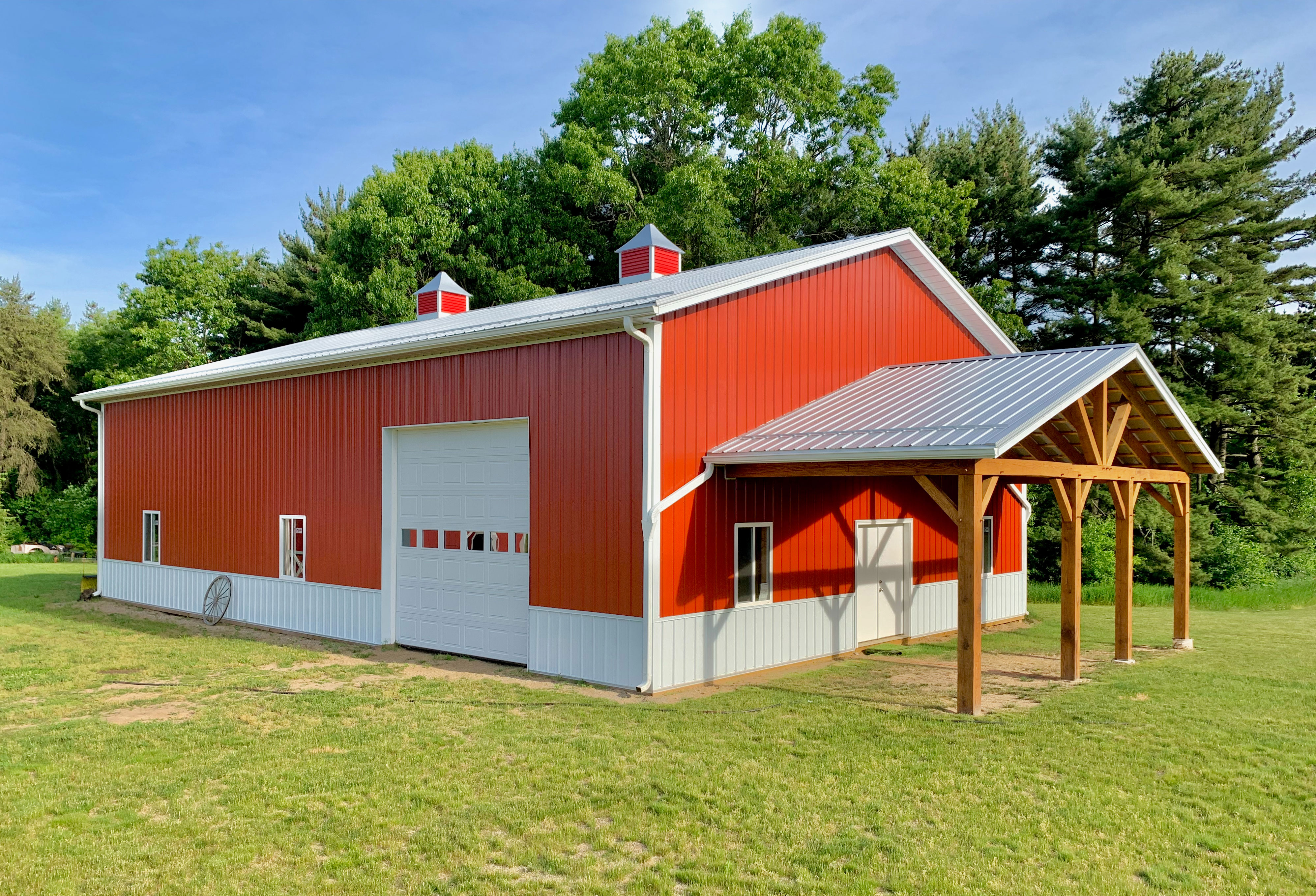
Pole barns are becoming increasingly popular in Indiana—and it’s no wonder why.
Flexible, cost-effective, and durable, post-frame construction provides property owners with the space they need—whether that’s for storage, a growing business, or an at-home hobby barn. But while pole buildings seem to be all the rage, there’s still one question on every buyer’s mind.
Can I justify the cost?
To help you make that decision, we’re breaking down the financials of post-frame buildings in Indiana.
Here, you’ll find:
- The ROI hard numbers (building appraisal at resale)
- Five key points for maximizing your pole barn’s monetary value
- Five steps to determining if a pole barn is worth the upfront costs
So saddle up, Hoosiers. Things are about to get interesting.
The Hard Numbers (Pole Barn Appraisals After Construction)
Indiana pole barns typically add 50%–80% of their construction costs to a property value.
That means a $35,000 pole barn can expect to add $17,500–$28,000 to your home’s value at resale.
Note that while pole barns do not provide a 1:1 return on building costs, the 50% – 80% bracket only accounts for appraisal returns. In fact, you can significantly boost these figures by considering additional long-term savings, income potential, and by maximizing design to attract qualified buyers in the future.
How to Maximize Pole Barn Resale Value
To increase your pole barn's added property value, focus on functionality.
Check out the following considerations (all of which will attract more buyers):
- Floorplan Size: Pole barn owners often regret not building bigger. This is because larger spaces provide greater flexibility. But there’s a catch. Don’t build a building so large it overwhelms the property. A pole barn should be an asset, not the main show.
- Building Quality: Nothing hurts property value like a decrepit building—and cheaper builds tend to sport shorter lifespans. That said, with high-quality materials and construction, a pole barn can easily last 40–60 years—and even over 100 years with proper upkeep.
- Utilities & Functionality: Remember, you do not know what potential buyers will want in a secondary space. And pole barns with electric hookups, lighting, concrete floors, insulation (and maybe even water) demand higher appraisal and property resale value.
- Access & Layout: Access plays a major role in a pole barn's functionality—especially driveway placement, door width, and overall location on the property. In fact, buyers with multiple recreational vehicles use pole barn access as a determining factor when deciding whether to buy a property.
- Location: Pole barns in rural areas drive higher returns than their suburban or urban counterparts. Lot size, lifestyle, and the need for storing large RVs, equipment, or agricultural assets drive that demand.
How to Calculate Long-Term Pole Barn Costs and ROIs
Pole barns almost always pay off for owners who will use the space. However, financial justifications can turn a good idea into a great one.
These five steps will help you determine the long-term costs and potential ROI of a new pole building.
- Start with Construction: Talk to a few pole barn contractors to get an idea of building costs. Speaking with a contractor familiar with pole barns can also help you decide on the best floor plan, square footage for your budget, and property placement for long-term value.
- Estimate Property Value: To determine the added appraisal value, multiply building costs by .5 (50%) for the low end of returns, or .8 (80%) for the higher end. For example: ($24,000 x .5) = $12,000 property value increase.
- Factor in Avoided Costs: Calculate what you currently spend or would be spending on storage or workshop space over the intended use of your pole barn. Example: $150 per month in RV storage equals $9,000 in savings over five years.
- Consider Timeline Impact: Properties with desirable outbuildings sell faster as compared to those without secondary structures—reducing carrying costs and stress, while providing greater certainty when purchasing your next property.
- Calculate Usage: How much will you personally benefit from a pole barn? If it enables a side business, increases personal joy, or simply eliminates the frustration of inadequate storage, that added utility has real value beyond dollars.
Add up these six steps to determine if a pole barn makes sense for you.
Most property owners find pole barn construction in Indiana pays for itself within five to seven years—while contributing to long-term equity growth and improved quality of living in the meantime.
Explore Pole Barn Options Today!
New beginnings, possibilities, and experiences ahead—that’s what New Horizon Builders has stood for for the past 20 years.
Reach out today for a free estimate on your new pole barn—and know you’re in good hands with a family-owned and operated construction company in Indiana that believes in quality workmanship, honesty, fairness, trust, and your long-term satisfaction.
Ready to explore the potential of a pole barn on your property?
With over 20 years experience in general construction and 300+ successful projects under our belt, New Horizon Builders has expertise building homes of all types and sizes. And as much as we believe in quality work and care, what’s even more important to our crews is building lasting, trusting relationships with homeowners right here in our beloved Hoosier State.